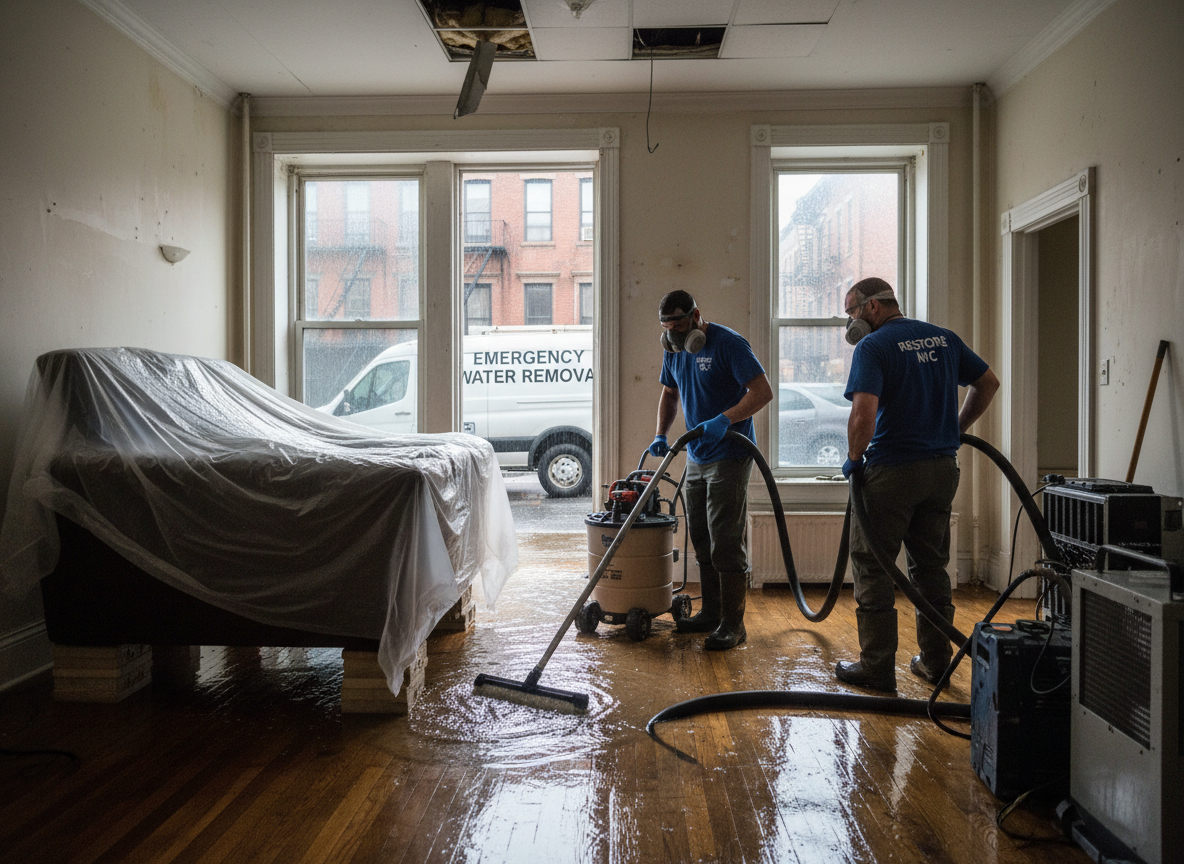
Freeport homes along the south shore face repeated water intrusion from nor'easters and summer downpours in the humid subtropical climate. Our crew based at 4830 45th St drives out to handle older bungalows and split-levels where aging cast-iron pipes and shallow lots with poor drainage cause basement seepage after heavy rain. We focus on rapid moisture removal before mold sets in during the hot, humid months.
Winter freezes bring their own problems when pipes burst in unheated crawl spaces common in Freeport's pre-war housing stock. We extract standing water, apply targeted drying under floors, and address the salt-air corrosion that speeds up fixture failures near the bay. Service runs Monday through Friday 8am to 6pm and Saturday 9am to 2pm for these urgent calls.
Access to many Freeport streets is tight due to narrow driveways and canal-side properties, so our equipment is sized to maneuver without blocking neighbors. This matters on blocks near Woodcleft Canal where tidal influence keeps soil saturated year-round.
Around 31. Freeport
We regularly work near:
- 📍Woodcleft Canal
- 📍Freeport Public Library
- 📍Freeport Village Hall
- 📍Freeport High School
- 📍Freeport Recreation Center
Water Damage Repair in 31. Freeport — Local Notes
- •Freeport's high water table and proximity to Woodcleft Canal mean even moderate rain can push groundwater into basements on Atlantic Avenue and nearby side streets, requiring subfloor drying beyond standard extraction.
- •Many 1920s-1950s bungalows here have slab-on-grade construction with limited access points, so we use compact dehumidifiers and moisture meters to reach hidden pockets without major demolition.
- •Nor'easter storm surges often affect properties east of South Ocean Avenue, where we prioritize antimicrobial treatment because the combination of salt water and summer humidity accelerates mold growth.
- •Narrow lots and canal bridges limit large truck access, so our response vehicles carry portable pumps sized for these constraints while still reaching saturation levels typical after coastal flooding.