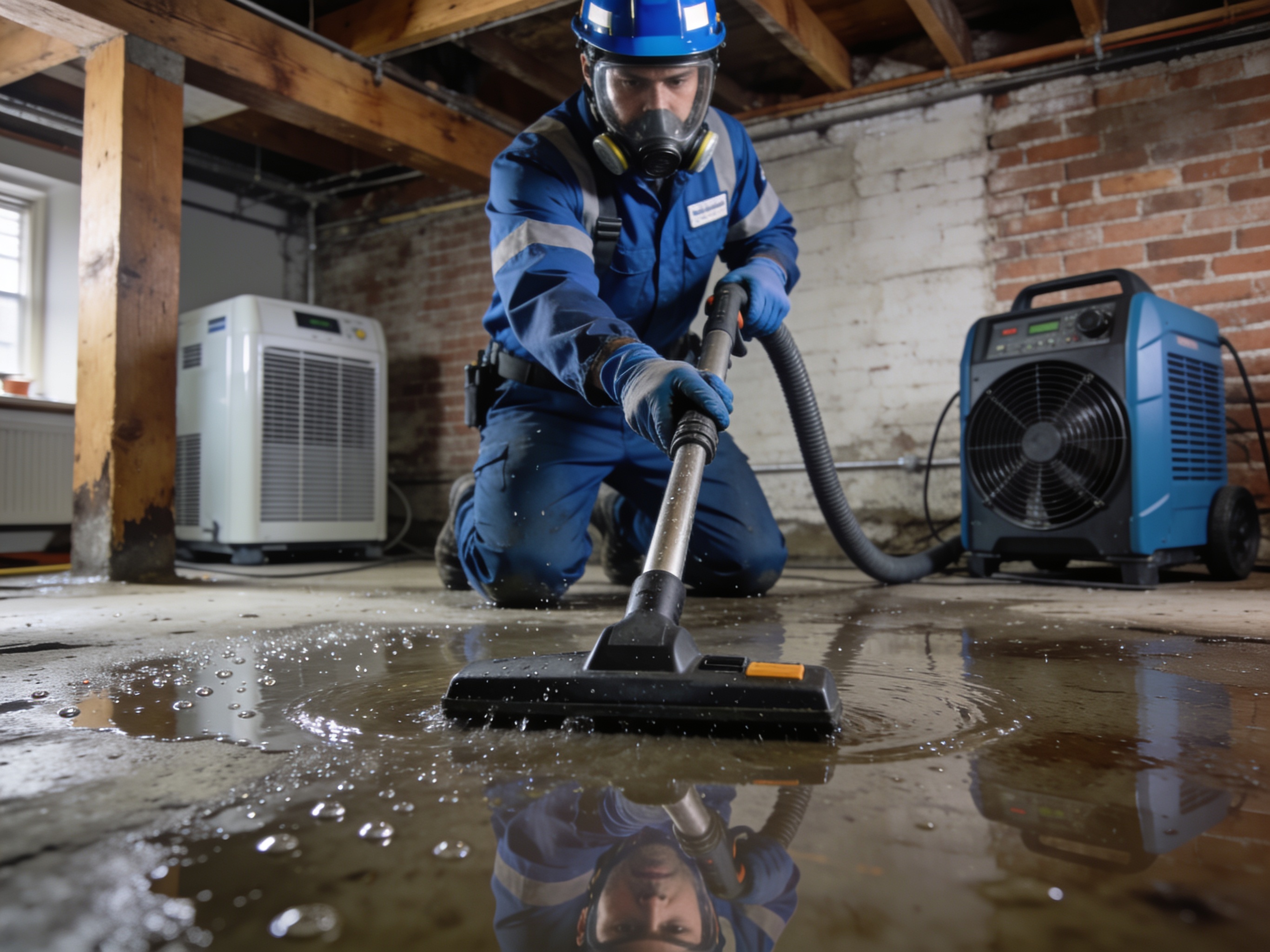
New York County properties, especially pre-war apartments and brownstones along the Upper East Side, often feature cast-iron pipes and narrow basements that trap water after summer thunderstorms or winter freezes. Once temperatures drop below freezing, even small roof leaks near Central Park can migrate through brick and lath walls, requiring targeted demolition to reach hidden moisture before mold sets in. Crews must navigate tight elevator schedules and co-op board approvals that can delay access by hours.
Hot, humid summers increase the risk of secondary damage in multi-story buildings near Times Square and the Empire State Building, where shared walls allow moisture to travel between units. Industrial dehumidifiers and air movers must run continuously for days because the dense urban layout limits natural airflow. Technicians check for hidden saturation in subflooring and behind plaster, since skipping these steps leads to callbacks when humidity spikes again.
Brooklyn and Bronx spillover calls frequently involve row-house cellars with poor grading toward the street, so extraction plans account for runoff from adjacent properties. Restoration work here focuses on restoring original hardwood floors and plaster without triggering landmark review delays common in Manhattan.
Technician insight
In New York, the thing that catches most people out with 24/7 Water Damage Restoration is how quickly moisture travels through the brick and lath in pre-war Upper East Side buildings once a pipe bursts during a cold snap; homeowners often stop at visible water and miss the saturation two floors down.
Frozen Pipe Leak on the Upper East Side
A burst pipe on the third floor of a 1920s building near Central Park sent water through multiple units during a January freeze. Scans revealed saturation behind plaster on two lower levels that surface checks missed. Extraction and continuous drying over four days prevented mold growth and allowed the co-op to reopen units without full wall replacement.
24/7 Water Damage Restoration Services We Offer
✓Burst Pipe Water Extraction
Rapid removal of standing water from older cast-iron lines common in Upper East Side buildings to prevent migration into neighboring units.
✓Winter Freeze Damage Drying
Targeted drying after frozen pipes thaw, accounting for cold-weather humidity retention in unheated Manhattan basements.
✓Storm Flood Restoration
Cleanup and moisture mapping after heavy summer rains that overwhelm combined sewer systems near Central Park and Times Square.
✓Sewage Backup Cleanup
Safe extraction and sanitization of contaminated water from aging municipal lines affecting ground-floor spaces in New York County.
✓High-Rise Structural Drying
Equipment setup in elevator-limited buildings to dry multiple floors without disrupting co-op schedules around the Empire State Building.
24/7 Water Damage Restoration Cost in New York, NY
| Service | Typical Range | What Affects It |
|---|---|---|
| Initial Assessment | $150–$300 | Varies with building size and elevator restrictions |
| Water Extraction | $600–$2,200 | Higher for sewage or multi-floor spreads |
| Structural Drying | $800–$3,000 | Duration affected by summer humidity levels |
| Final Moisture Verification | $200–$450 | Includes written report for insurance |
Ranges are typical for New York, NY and confirmed with an exact written quote before any work starts.
How it works
- 1
Immediate Dispatch
Technicians arrive within hours to assess water source and affected materials in Manhattan buildings.
- 2
Water Extraction
Portable pumps and vacuums remove standing water while protecting original floors and walls.
- 3
Moisture Mapping
Infrared scans locate hidden saturation behind plaster and in subfloors common to pre-war construction.
- 4
Drying and Monitoring
Industrial equipment runs until readings confirm safe levels, with daily checks to adjust for local humidity.
- 5
Restoration Handover
Final walkthrough ensures all affected areas are addressed before returning the property to the owner.
Pricing
Upfront estimates provided after on-site inspection; final cost depends on water volume, affected square footage, and access constraints.