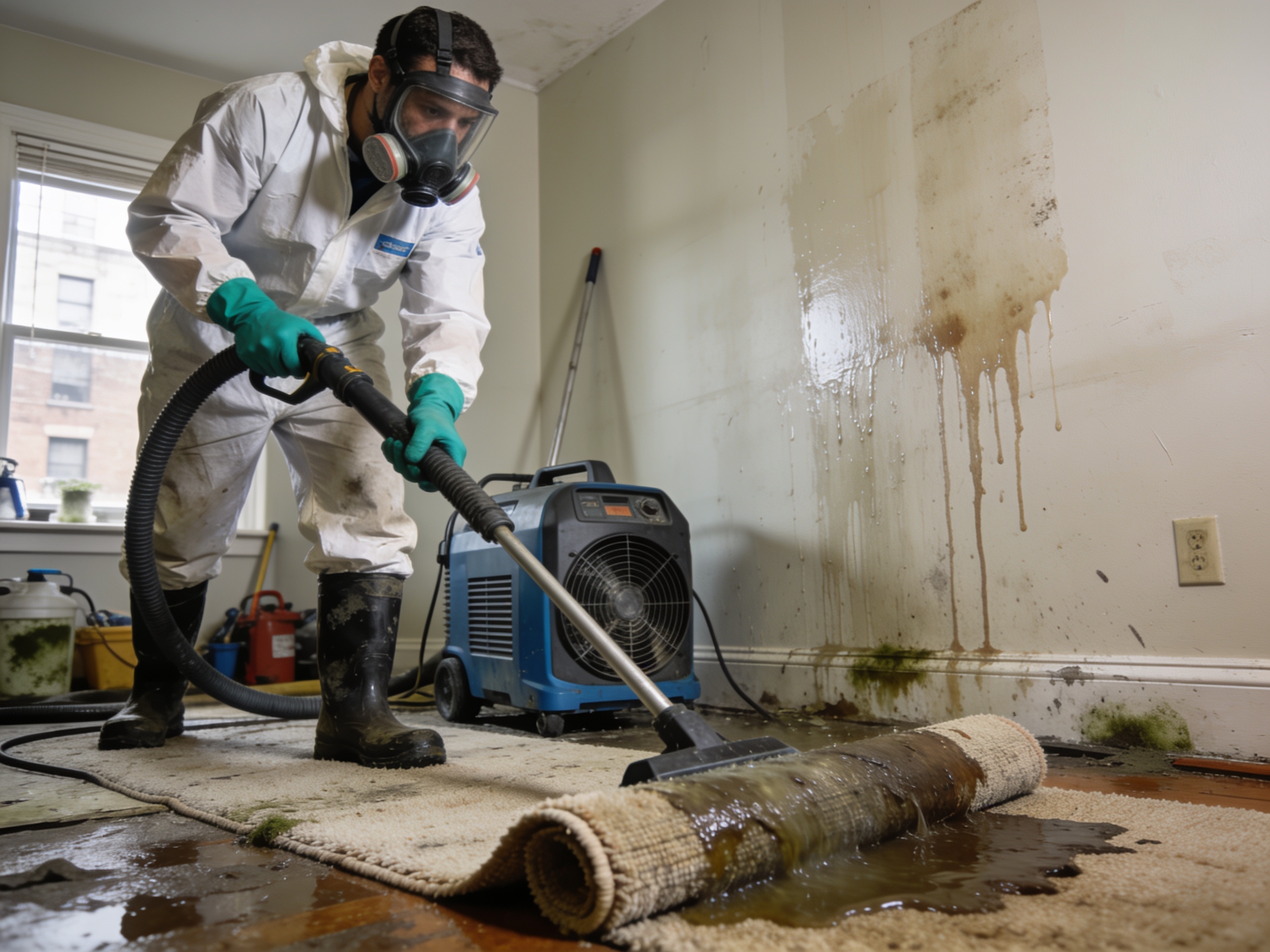
New York County buildings, especially those lining the Upper East Side and blocks around Central Park, often date to the early 1900s with cast-iron stacks and brick foundations that channel water quickly into neighboring units. A single burst riser on an upper floor can saturate plaster lath and shared party walls before residents notice pooling on the ground floor. Humid subtropical summers keep residual moisture high, while winter freezes expand small cracks in exposed lines along building exteriors near Times Square and the Empire State Building.
Restoration crews must account for tight elevator access, co-op board rules on after-hours work, and the risk of hidden mold behind wainscoting in brownstones. Extraction equipment has to navigate narrow service corridors without disturbing tenants in adjacent Bronx and Brooklyn buildings that share the same utility feeds. Dehumidification targets are set lower than suburban jobs because the dense masonry retains humidity longer, requiring extended drying cycles to meet code before new finishes can be installed.
Technicians also monitor for secondary damage to electrical panels located in basements that flood during heavy rains, a common issue in low-lying pockets west of Central Park. Documentation for insurance adjusters includes moisture readings at multiple depths in the original timber joists, which are often undersized by modern standards and prone to rapid decay once saturated.
Technician insight
In New York, the thing that catches most people out with Water Damage Restoration is how quickly water travels through the original brick and timber framing in Upper East Side buildings; a small leak on the fourth floor can reach the basement and affect units on both sides before anyone calls, especially after a winter freeze expands old cast-iron lines.
Upper East Side Apartment Leak
A corroded supply line in a pre-war building near Central Park released water overnight. Inspection found saturation in three units across two floors plus hidden growth behind plaster. Extraction and targeted drying prevented further spread into neighboring Bronx-side units; clearance readings allowed reconstruction within ten days.
Water Damage Restoration Services We Offer
✓Emergency Water Extraction
Rapid removal of standing water from apartments and brownstones using portable pumps suited to narrow Manhattan stairwells and elevator restrictions.
✓Structural Drying and Dehumidification
Targeted drying of plaster, lath, and masonry walls with commercial air movers and desiccant units calibrated for humid New York summers.
✓Mold Remediation After Water Intrusion
Containment and removal of mold growth behind walls in pre-war buildings where moisture has lingered in shared party walls.
✓Pipe Burst Restoration
Repair and drying following frozen or corroded supply lines common in Upper East Side co-ops and older Manhattan high-rises.
✓Basement Flood Cleanup
Clearing and drying below-grade spaces in New York County buildings affected by storm runoff or backed-up municipal drains.
Water Damage Restoration Cost in New York, NY
| Service | Typical Range | What Affects It |
|---|---|---|
| Initial Assessment | Free | Includes moisture readings in Manhattan apartments and brownstones |
| Water Extraction | $900–$2,800 | Varies by floor count and access in pre-war buildings near Central Park |
| Drying And Monitoring | $1,200–$3,500 | Extended runs needed for masonry walls in New York County |
| Mold Remediation Add-On | $1,500–$4,200 | Required when hidden growth is found behind shared walls |
Ranges are typical for New York, NY and confirmed with an exact written quote before any work starts.
How it works
- 1
On-Site Assessment
Technicians map moisture migration through original construction materials and note access limits imposed by building management.
- 2
Water Removal
Portable extraction equipment pulls standing water while protecting adjacent units in dense Manhattan and nearby Brooklyn structures.
- 3
Drying And Monitoring
Industrial drying equipment runs until moisture meters confirm safe levels in brick, plaster, and timber throughout the affected zone.
- 4
Restoration Hand-Off
Final walkthrough documents conditions for insurance and prepares surfaces for licensed trades to complete repairs.
Pricing
Upfront quotes issued after inspection; final cost depends on water volume, depth of saturation in historic materials, and required drying time.