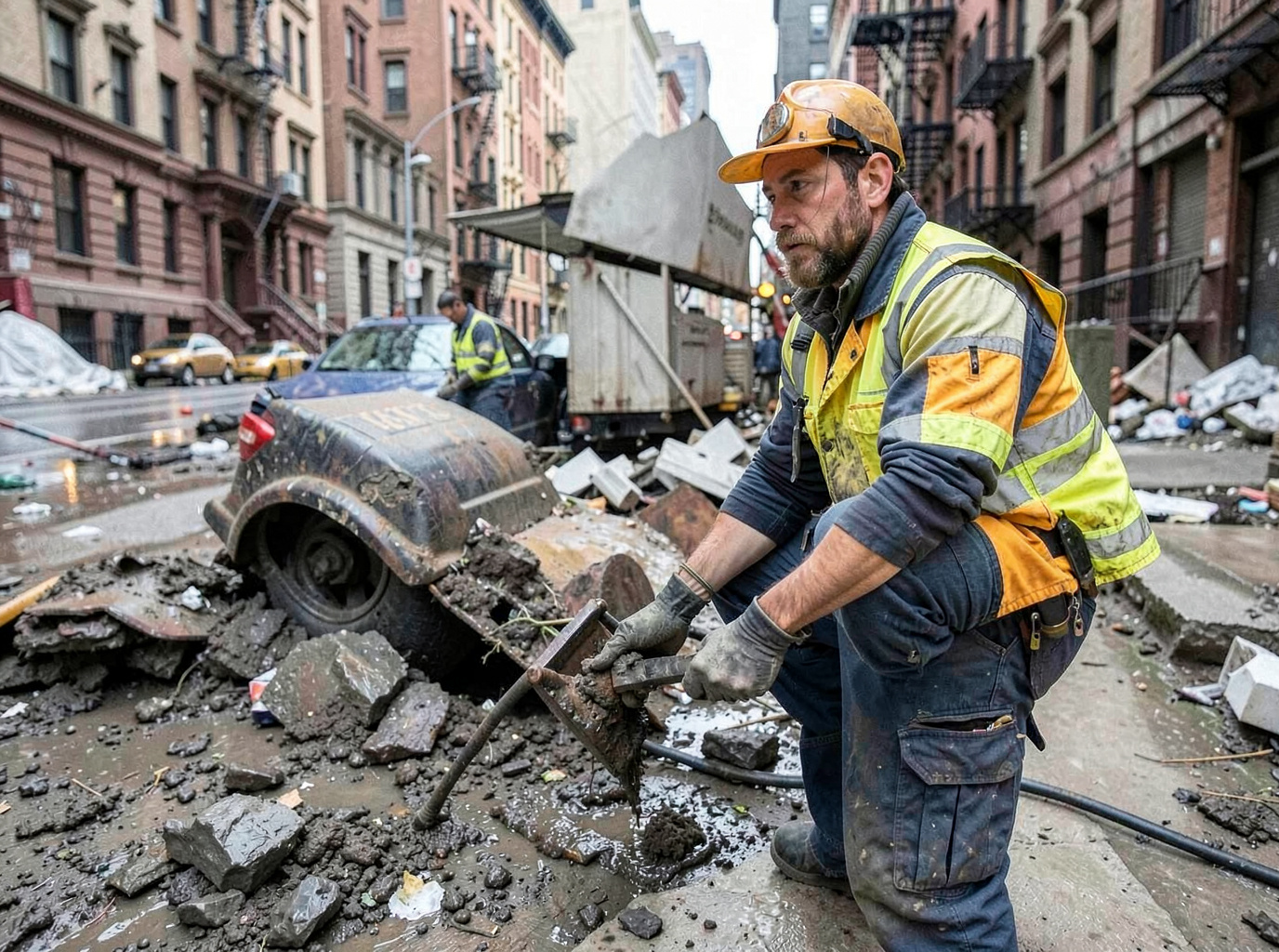
New York County row houses and pre-war apartments in Manhattan and the Upper East Side often have limestone foundations and shared walls that let floodwater travel between units. After heavy summer rains or nor'easters, water pools in cellars near Central Park and moves upward through brick. Extraction crews must isolate units quickly because moisture travels into plaster and lath, creating hidden pockets behind Empire State Building-era trim. Delaying removal risks mold in the humid subtropical summers that follow.
Winter freezes in the Bronx and Brooklyn send water from burst mains into ground-floor spaces, then the cold slows evaporation. Crews use low-grain dehumidifiers calibrated for tight Manhattan lots where airflow is blocked by neighboring buildings. Subflooring in these structures is frequently original pine; it warps fast if left wet, so moisture meters are run daily until readings stay under 12 percent. Sewage backups from combined sewer systems require separate containment to avoid cross-contamination with clean floodwater.
Times Square commercial basements sit below the water table and see tidal influence during coastal storms. Restoration here includes removing saturated insulation from steel beams without disturbing load-bearing members. Technicians document every step for New York City building code compliance because inspectors check for proper drying before new finishes are installed. Homeowners in the Upper East Side often discover that insurance covers only initial extraction, not the repeated visits needed when humidity spikes again in July.
Technician insight
In New York, the thing that catches most people out with Flood Damage Restoration is how quickly moisture travels through the limestone party walls in Upper East Side brownstones. One flooded cellar near Central Park can push water into the neighbor's unit within hours, especially when summer humidity keeps everything damp for weeks afterward.
Upper East Side brownstone cellar after nor'easter
Water entered through a sidewalk vault during a coastal storm and soaked original pine joists. Assessment showed migration into the adjacent unit's plaster. Extraction and targeted drying prevented mold spread; the space passed inspection and was ready for new finishes within ten days.
Flood Damage Restoration Services We Offer
✓Basement Flood Extraction
Rapid removal of standing water from Manhattan and Upper East Side cellars using truck-mounted pumps sized for tight access points common in pre-war buildings.
✓Sewage Backup Cleanup
Containment and removal of contaminated water from combined sewer overflows that affect ground-floor units near Central Park after heavy rains.
✓Structural Drying and Dehumidification
Placement of commercial air movers and desiccant units in older brick and limestone structures where shared walls trap moisture between apartments.
✓Mold Prevention After Flooding
Antimicrobial treatment and moisture mapping in humid subtropical summers to stop growth behind plaster in New York County row houses.
✓Subfloor and Insulation Replacement
Removal of warped pine subfloors and saturated insulation in Bronx and Brooklyn ground-floor spaces damaged by winter pipe bursts.
Flood Damage Restoration Cost in New York, NY
| Service | Typical Range | What Affects It |
|---|---|---|
| Basement water extraction | $800–$2,200 | Varies with depth and sewage involvement |
| Full structural drying | $1,500–$4,000 | Depends on number of rooms and humidity duration |
| Mold prevention treatment | $600–$1,800 | Higher in summer months after repeated moisture |
| Subfloor replacement | $2,000–$5,500 | Driven by square footage and original pine condition |
Ranges are typical for New York, NY and confirmed with an exact written quote before any work starts.
How it works
- 1
On-Site Assessment
Technicians inspect affected levels in Manhattan buildings, map moisture migration through shared walls, and note any sewage involvement from local sewer lines.
- 2
Water Removal
Pumps and vacuums extract standing water while containing runoff to protect neighboring properties in dense Upper East Side blocks.
- 3
Drying And Monitoring
Equipment runs until daily meter readings confirm safe levels, accounting for summer humidity that slows the process in New York County.
- 4
Final Clearance
Documentation of dry conditions is provided for building inspectors before any new materials are installed.
Pricing
Upfront quotes after inspection account for building age and water category.